What Is Breathwork Really For?
5 Lessons From 10+ Years of Practice
Breathwork has become increasingly popular, but people often arrive with very different ideas about what it is supposed to do.
Is breathwork about regulating the nervous system? Releasing emotion? Feeling better? Having a spiritual experience? Becoming more relaxed?
It can involve many of those things.
But after more than ten years practicing, teaching, and facilitating Revelation Breathwork, I’ve come to see breathwork a little differently.
For me, the deepest value of breathwork isn’t simply changing how we feel. It’s becoming more available to what is already here – our bodies, emotions, inner wisdom, relationships, humanity, and ultimately our relationship with the Divine.
Here are five things I wish more people understood about breathwork and healing.
1. Breathwork Isn’t Just About Physiology or Technique
One of the biggest misconceptions I see about breathwork is that the technique itself is what creates transformation.
Physiology matters. Breathing patterns matter. Facilitator training and understanding the nervous system matter.
But in my experience, intention and willingness matter just as much – and sometimes more.
I often tell people that I’m not really in the “feel good” business.
That might sound strange coming from someone who teaches breathwork, but I don’t believe sadness, anger, fear, grief, discomfort, or struggle are signs that something has gone wrong.
Sometimes they are precisely where the work is.
There can be a temptation to use breathwork, meditation, spirituality, or healing practices to escape uncomfortable emotions. We start trying to breathe ourselves out of sadness, meditate ourselves out of anger, or spiritually transcend the messiness of being human.
I’m much more interested in what happens when we make enough space inside ourselves to feel it all, allow it all, and ultimately accept it all.
The breath can help us stop running from our experience and begin meeting it.
And sometimes that willingness becomes the doorway to profound healing.

“I’m not really in the ‘feel good’ business. I’m interested in helping people become willing to feel it all.”
2. Success in Breathwork Doesn’t Necessarily Mean “Feeling Better”
Feeling better is wonderful.
But I don’t think it’s the deepest measure of whether healing is occurring.
For me, success looks more like becoming increasingly loving toward ourselves and increasingly willing to allow life to be what it is.
There’s a line from The Way of Mastery that I love:
“Love allows all things.”
Much of our suffering comes from resisting what is happening.
We judge ourselves. Fight reality. Decide we shouldn’t feel what we feel. Believe another person has to change. Tell ourselves life needs to become different before we can finally be at peace.
And sometimes spirituality itself becomes another strategy for making life comfortable.
From the perspective of Spiritual Psychology that deeply informs my work, we are Divine Beings who have chosen to have a human experience.
The joy is part of it.
So are heartbreak, fear, uncertainty, grief, relationships, creativity, failure, longing, pleasure, loss, and growth.
If we use spirituality solely to escape the uncomfortable parts of being human, we may actually miss part of what being here offers us.
So success isn’t necessarily arriving at a place where life stops hurting.
It might be developing the capacity to meet yourself lovingly even when it does.
That realization can happen powerfully in a single breathwork session.
Then life gives us endless opportunities to practice it.
“Success isn’t necessarily arriving at a place where life stops hurting. It might be developing the capacity to meet yourself lovingly even when it does.”
3. How Do You Choose a Breathwork Facilitator?
People often ask what they should look for when choosing a breathwork facilitator.
Training matters.
Experience matters.
Trauma-informed education matters.
An understanding of breathing physiology matters.
But I think there is another question that is just as important:
Do you resonate with this person?
Healing is relational.
Someone may have every certification imaginable and simply not be the right facilitator for you.
Conversely, you might meet someone relatively new to facilitating and immediately feel safe, respected, and comfortable exploring with them.
Pay attention to that.
A good breathwork facilitator should create space for your experience rather than telling you what your experience means.
I would be cautious around anyone who makes sweeping promises, diagnoses your experience, pressures you beyond your boundaries, or positions themselves as the person who is going to heal or fix you.
The facilitator can guide.
They can educate.
They can support.
They can create a powerful container.
But ultimately, the wisdom belongs to the person breathing.

“The facilitator can guide, support, and hold space. But ultimately, the wisdom belongs to the person breathing.”
4. Breathwork Became a Way for Me to Experience Spirituality Directly
I’ve always been drawn toward God, Spirit, and what I would describe as the Divine Presence within life.
And because I experience that Presence as something we aren’t separate from, the desire to know God has also been a desire to know myself more intimately.
Before discovering Revelation Breathwork, I had several experiences I would describe as mystical.
They were beautiful and deeply meaningful.
But they seemed unpredictable – almost like moments of grace that simply arrived.
My first experiences with Revelation Breathwork changed something for me.
I discovered that I could intentionally create conditions in which the constant activity of my thinking mind could quiet enough for me to listen to something deeper.
What I might call Spirit within.
Instead of merely having ideas about spirituality, I could experience something directly.
Once I experienced that, sharing the practice with others felt natural.
But that doesn’t mean I believe anyone needs saving.
I don’t believe people are broken.
I don’t believe anyone is spiritually behind, delayed, or off-track.
I trust that there is an intelligence within the Soul guiding each person through experiences that can serve their growth.
So I don’t think of myself as being in the saving business.
I’m in the sharing business.
When something has profoundly affected my life, I want to share it – just as I would share a book, song, film, teacher, or idea that changed the way I see the world.
5. Your Daily Life Is Your Ashram
This may be the biggest thing I wish I understood earlier.
Your daily life is your ashram.
You don’t have to go somewhere else to become spiritual.
There isn’t some distant destination called “healed” that you finally arrive at after enough breathwork sessions, retreats, therapy, meditation, or personal development.
Healing, as I’ve come to understand it, is much more about waking up repeatedly to who we already are.
And as that awareness expands, we begin seeing our human experience from a broader perspective.
The relationship that triggers you becomes part of the practice.
Parenting becomes part of the practice.
The traffic jam becomes part of the practice.
Heartbreak becomes part of the practice.
Your work becomes part of the practice.
So do joy, laughter, friendship, uncertainty, boredom, fear, and an ordinary Tuesday morning.
It all belongs.
Even healing can become another accomplishment the ego chases:
Once I fix this part of myself, then I’ll finally be okay.
I’ve come to see the invitation differently.
There may be nowhere else to get to.
There is simply an opportunity to become increasingly awake to the life that is already here.
It’s all God.
And all of it can become part of our awakening.
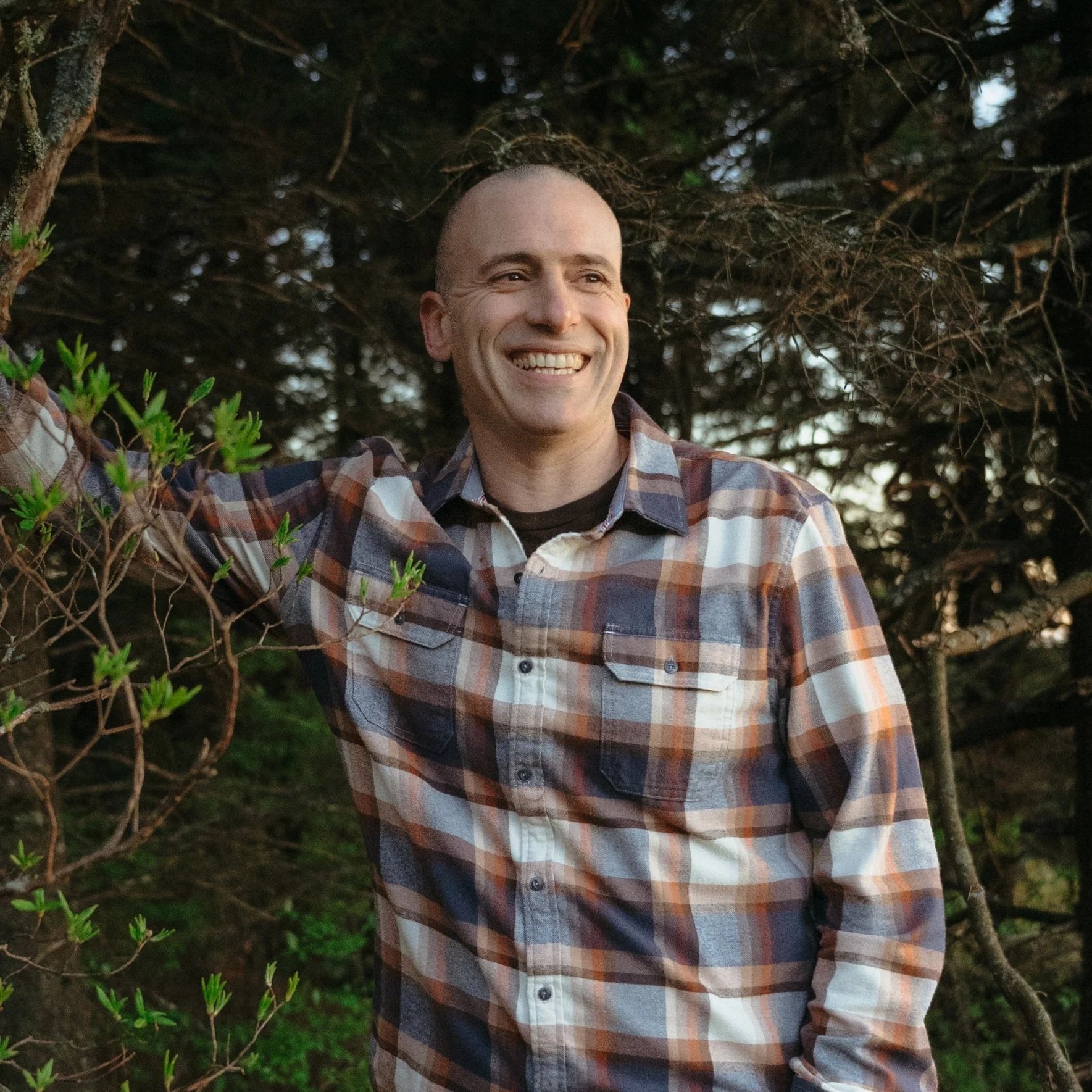
“Your daily life is your ashram.”
Explore Revelation Breathwork In Person and Online
I teach Revelation Breathwork both in person in Asheville, North Carolina, and through our online Revelation Breathwork community.
If you’re local to Asheville, you can join me for in-person classes that combine conscious connected breathing, music, intentional inner exploration, and a spiritually oriented approach to healing and personal growth.
If you’re not in Asheville – or you simply prefer practicing from home – our online membership gives you access to live Revelation Breathwork classes throughout the week, along with an on-demand library of more than 1,400 classes and practices you can explore anytime.
The online community includes longer breathwork journeys, shorter Reset practices, themed series, and Breath Church – giving you multiple ways to make breathwork part of your regular life rather than something you only experience occasionally.
My intention is the same whether we’re breathing together in Asheville or online:
Not to give you an experience you’re supposed to have.
But to create a space where you can listen more deeply to your own.
Explore Asheville Breathwork Classes
Explore the Revelation Breathwork Online Membership
Start your 2-week free trial for online class (no strings, cancel anytime)
Frequently Asked Questions About Breathwork
What is breathwork?
Breathwork is a broad term that describes intentional breathing practices used for physical, emotional, psychological, or spiritual exploration.
Different styles use different breathing patterns, philosophies, and approaches. Revelation Breathwork uses conscious connected breathing, music, intention, and guided inner exploration.
Can breathwork bring up emotions?
Yes.
Breathwork can sometimes bring greater awareness to emotions that are already present beneath the surface. That might include grief, anger, fear, joy, tenderness, or relief.
The goal is not to force an emotional release, but to create space for whatever naturally arises.
What does breathwork feel like?
Every experience is different.
Some people feel deeply relaxed. Others experience emotion, physical sensations, insight, clarity, or a sense of spiritual connection.
There is no one “correct” breathwork experience.
How do I choose a breathwork facilitator?
Look for someone who is appropriately trained, respects your boundaries, understands the breathwork method they teach, and creates an environment where you feel safe and respected.
Just as importantly, notice whether you genuinely resonate with the person.
How often should you practice breathwork?
There isn’t one right answer.
Some people benefit from a regular weekly practice, while others use breathwork periodically for deeper reflection or support.
The frequency matters less than approaching the practice with intention and listening to your own body and experience.
Can I practice Revelation Breathwork online?
Yes.
Revelation Breathwork offers an online membership with live classes throughout the week and an extensive on-demand library of more than 1,400 classes and practices.
This gives you the opportunity to develop a regular breathwork practice from home while still being part of a live community.
About Revelation Breathwork
Revelation Breathwork is a heart-centered breathwork practice designed to help people move beyond the thinking mind and explore the emotional, energetic, and spiritual dimensions of their experience.
Through conscious connected breathing, music, intention, and guided inner exploration, the practice creates space for greater awareness, emotional expression, insight, and connection.
You can experience Revelation Breathwork in person in Asheville, North Carolina, or through our online community and membership.